
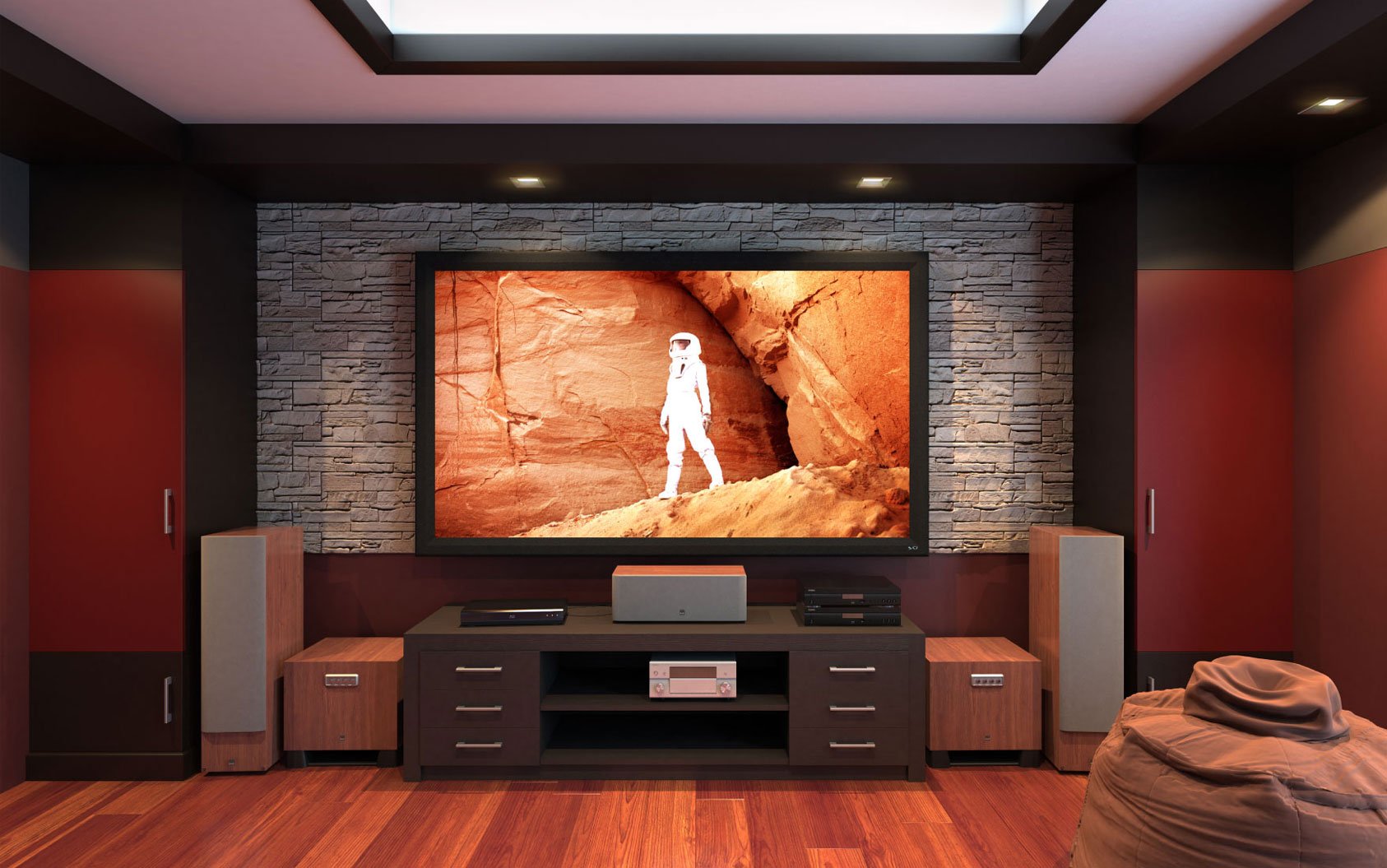
Creating the perfect home theater experience should feel effortless and exciting! Imagine stepping into a space where stunning visuals fill your view, dialogue stays crystal clear at any volume, and the bass resonates powerfully without rattling the whole house. Plus, having one remote to control everything adds such convenience! However, this seamless experience doesn’t just happen—it comes from thoughtful planning.
Whether you’re transforming a basement in Lee's Summit, designing a media room in Overland Park, or crafting a dedicated theater in your new Olathe home, the choices you make before any installation begins will significantly influence your enjoyment for years to come. In this guide, we’ll explore the key factors that shape home theater costs, spotlight essential design decisions, and share important questions to ask any installer. Let’s make your dream home theater a reality!
What Drives Home Theater Installation Cost
When homeowners start to create their ideal space, it’s common to seek a price estimate upfront. However, it's important to consider various factors that can influence your budget:
1. Creating a dedicated theater vs. a more versatile family room.
2. Building out or finishing a basement (Electrical, Framing, Drywall, Finishing)
3. Choosing between a large flat panel, a projector, or an LED wall significantly affects your room layout and equipment needs.
4. Upgrading from a simple 2-channel system to a surround or Dolby Atmos setup can greatly enhance your audio experience and budget.
5. Custom construction or off-the-shelf noise abatement and acoustic treatment.
6. Lighting.
7. Automated shades.
8. Ongoing Support: Calibration, training, and post-installation service are crucial for protecting your investment.
For the best estimate, consider a site visit or a review of your plans to get a tailored quote based on your specific needs. Exciting possibilities await!
Design Choices That Make or Break the Room
Start with the room, then pick the screen size. When designing a room, experienced designers often start with furniture arrangement, which helps determine the ideal screen size for an engaging viewing experience. The right screen fills your field of vision from your main seating position—too small can strain your eyes, while too large may cause neck strain.
CEDIA and CTA guidelines offer valuable seating insights, but personal comfort is key.
Consider where you enjoy sitting in a cinema. Seat placement also affects sound quality; seats against the back wall can create bass "dead spots." Thoughtful layouts are essential, and for multiple seating rows, risers can enhance visibility and sound, creating an immersive environment for you and your guests. Let's create a fantastic space together!
Control the light.
Ambient light is the enemy of a projected image. In a dedicated, dark room, a standard projection screen performs beautifully. Some Kansas City media rooms have windows, light-colored walls, or an open floor plan, and for those, an ambient-light-rejecting (ALR) screen can make a projector viable where it otherwise wouldn't be. We like Screen Innovations, which designs and builds its screens and shades in Austin, Texas. Its Zero Edge fixed screens use a very thin aluminum bezel so the image looks like it floats on the wall. They can be paired with ambient-light-rejecting materials such as Slate and Black Diamond for rooms that can't be made fully dark. For multipurpose spaces, Screen Innovations' motorized screens can drop down only when it's movie time, and its motorized shades can darken the room at the touch of a button.
Speakers: free-standing, in-wall, on-wall, or in-ceiling
Most homeowners want great sound without big cabinets taking over the room. Architectural speakers solve that, but quality varies widely, and placement and installation matter as much as the brand on the box. These are the theater speaker lines we design with most:
Alcons Audio builds reference-grade private-cinema systems around its patented pro-ribbon tweeter, which stays clear and low in distortion even at full movie volume. Its CRMS speakers use the same mid- and high-frequency drivers in the screen, surround and height positions, so effects move around the room without changing character. The CRMSC-SRIW in-wall surround is under 4 inches deep.
JBL Professional has cinema in its roots: the company's founder built speaker components for MGM's movie-theater sound system in the 1930s, and JBL Professional still supplies speakers to commercial cinemas around the world. For larger private theaters, compact two-way Screen Array screen speakers such as the C221 and C222, paired with 8320 or 9300 surrounds, bring true cinema hardware home.
SoundTube Entertainment, right here in Lenexa, Kansas, builds its dARTS theater systems in the USA. Each dARTS system is a matched set of speakers and a digital amplifier calibrated to your room, with in-wall packages like the DIW660 and the DIW535, which add two in-ceiling height speakers.
Danley Sound Labs, based in Gainesville, Georgia, is known for horn-loaded speakers and subwoofers that play very loud with very low distortion. Its Cinema Line, including the CS-8CX and CS-100S surrounds and horn-loaded subwoofers, suits large dedicated theaters and screening rooms where typical home speakers run out of headroom.
Fulcrum Acoustic, built in Massachusetts, makes coaxial speakers, with the tweeter mounted in the center of the woofer, so the sound stays consistent from seat to seat. Its compact CCX speakers work well as surrounds and overhead speakers in larger rooms, and its Fulcrum Immersive division designs immersive audio for theaters and venues.
Theory Audio Design, based in Lake Forest, California, takes a system approach. Its slim on-wall, in-wall, and in-ceiling speakers are passive and run on Theory's own loudspeaker controllers, which combine amplification with digital signal processing tuned to those exact speakers. The SB25 on-wall and IW25 in-wall speakers deliver serious output in a profile slim enough for a living room, and its SB65, SB75, and SB85 soundbars are sized to match 65- to 85-inch screens.
Ceiling-mount theater speakers
Immersive formats such as Dolby Atmos add height (overhead) speakers to a traditional surround layout, and in most rooms those speakers go in or on the ceiling. Getting their positions right relative to the seats is a design task, not guesswork, and it's one of the most common things DIY and big-box installs get wrong. Here's what we look at:
In-ceiling or on-ceiling. Flush in-ceiling speakers disappear behind a paintable grille. Surface-mounted (on-ceiling) speakers can be aimed right at the seats and usually play louder and lower, which matters in larger rooms and under high or sloped ceilings.
Aim and coverage. Overhead speakers should point toward the listeners. Pivoting tweeters or rotatable horns help when joists keep a speaker from going exactly where the layout calls for it.
Matching voices. During a movie, sound moves from the screen to the walls to the ceiling. Height speakers that share drivers, or at least the same tonal character, with the front and surround speakers keep that movement seamless.
What's above the drywall. Joists, ductwork, sprinkler lines, and fire-rated ceilings decide which models fit. Back boxes keep sound from leaking into the rooms upstairs. Ceiling options from the brands above include Theory's ic6 6.5-inch in-ceiling speaker, the dARTS DC660R in-ceiling height speaker (the dARTS DIW535 in-wall package includes two), Alcons' compact CRMSC-SRHV surround, which doubles as a height speaker, Fulcrum CCX compact coaxials surface-mounted overhead in larger rooms, and JBL Professional's Control Contractor in-ceiling speakers for media rooms and multi-use spaces.
Don’t skip acoustics
Hard drywall, tile, and glass reflect sound and smear dialogue. A modest amount of well-placed absorption and diffusion, along with rugs and upholstered seating, makes a dramatic difference, often more than upgrading the speakers. Bass management and subwoofer placement deserve the same attention, because the room itself shapes low-frequency response.
Make it simple to use
The most impressive theater fails if only one person in the house can turn it on. A well-designed control system brings the display, audio, lighting, and shades together under one interface, with simple "Watch a Movie" and "All Off" buttons. Good training at handoff matters just as much.
What to Ask a Home Theater Installer
Before you hire anyone for a home theater installation in Kansas City, ask:
1. Who will do the work? Will the people in your home be the company's own employees, or subcontracted labor? If the laborers are interns or volunteers, injuries or death become the homeowner’s liability.
2. Are your technicians background-checked and insured? They'll be in your home for days.
3. Will you design the room, or just mount equipment? Ask how they determine screen size, seating position, and speaker placement.
4. Are you an authorized dealer for what you sell? Authorized dealers can properly support manufacturer warranties.
5. How is the system calibrated and tuned once it's installed?
6. What training do we get, and what happens when something needs service? Ask about response times, and who you call in year three.
Why Kansas City Homeowners Choose ASC
Advanced Sound & Communication has designed, installed, and supported audio, video, lighting and control systems since 1998. We're the sister company of Big Dude's Music, Kansas City's oldest privately owned music store. Here's what that means for your theater: Our own team, every time. About ten full-time employees with an average tenure of ten years. Everyone is background-checked, insured, and bondable. We never use volunteer, student, or subcontracted labor. In-house technical depth. Analog and digital technicians, certified riggers, OSHA training, and a mobile repair shop and tool truck to keep your system running. Authorized dealer in good standing for every brand we sell, including Alcons, JBL Professional, SoundTube, Danley, Fulcrum Acoustic, Theory Audio Design and Screen Innovations.
Professional-grade experience
Our work spans performing arts centers, recording studios, houses of worship, and professional home theaters, and it has been featured in industry trade publications. We bring that same rigor to your basement or media room. We serve homeowners across the metro, including Overland Park, Leawood, Lee's Summit, Olathe, Independence, Liberty, and beyond. Browse our recent projects, see our full range of design, installation, and service offerings, or explore products in our Pro AV Catalog.
Ready to Plan Your Home Theater?
Whether you're pre-wiring a new build or reimagining an existing room, the best time to talk to an integrator is before you lock in decisions. Call us at 816.931.9525, email brent.handy@advancedsoundkc.com, and send us your room photos and plans, and we'll set up a consultation.