
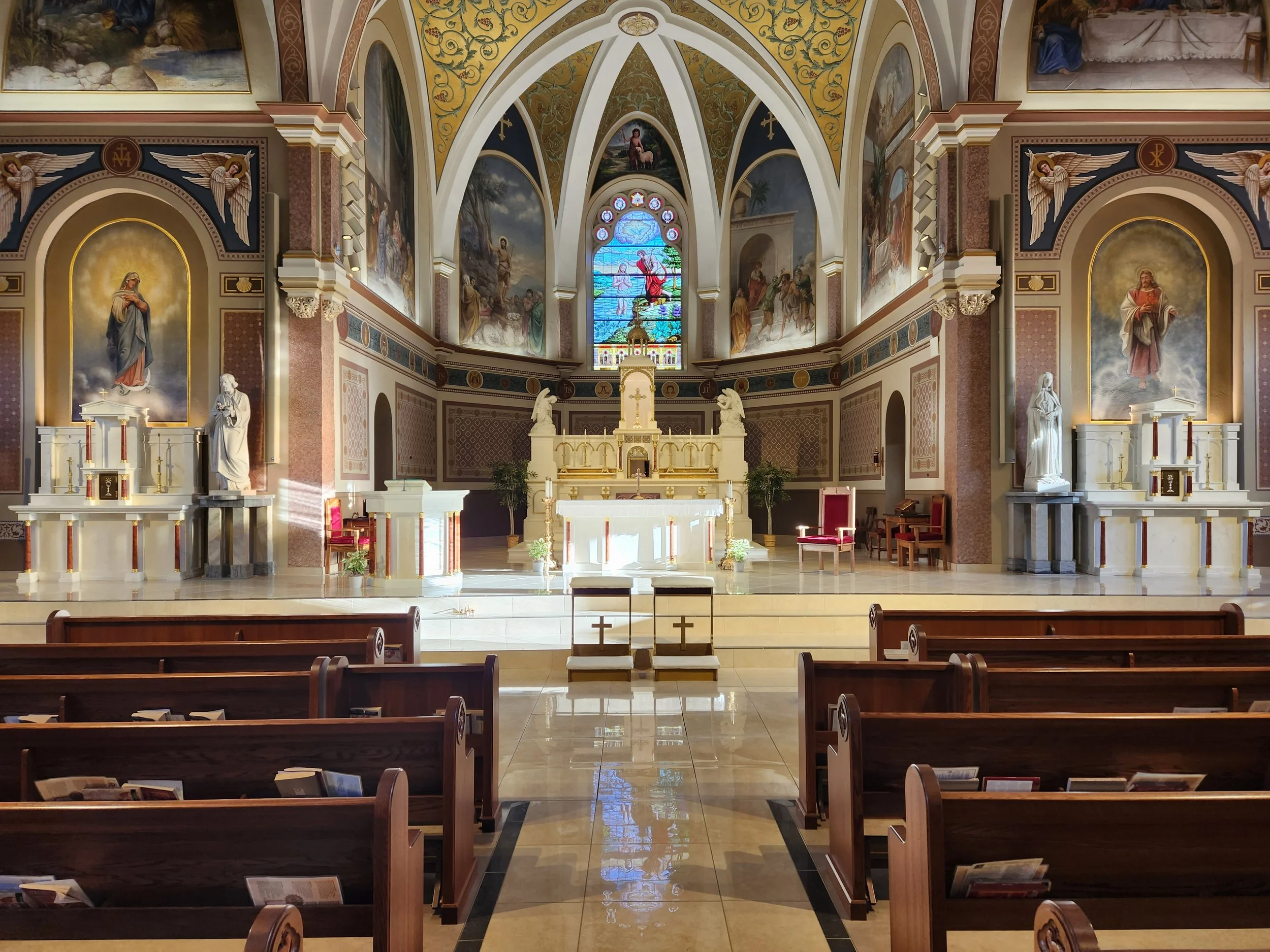
If your congregation is planning a church sound system installation, you probably have a list of frustrations already: people in the back say they can't hear well, the music is too loud, musicians can’t hear everything, feedback that shows up at the worst moment, or the person who knew how to run everything left and few people are good with technology. Most of those problems are solved before you order any equipment. Here is what the process looks like when it's done well, from the first walk-through to the Sunday your team runs the new system on its own.
Advanced Sound & Communication has designed, installed and supported worship arts audio, video, lighting and control systems across the Kansas City metro since 1998, from Overland Park and Olathe to Lee's Summit and Independence. Worship arts systems are at the core of what we do, so we know the process well.
Step 1: The Site Visit and Needs Assessment
A good installation starts with listening and learning, not a parts list. During the first visit, an experienced designer will look at and ask about:
The room itself. Ceiling height, wall and floor finishes, windows, balconies and the overall shape all decide how sound behaves. A hard-surfaced sanctuary with a high ceiling needs a very different approach than a carpeted, low-ceiling fellowship hall.
How you worship. A spoken liturgy with organ and choir has different needs than a full band with in-ear monitors.
Who runs the system. Is it a paid technical director, a rotating group of volunteers, or the pastor pressing one button? The answer shapes how simple the controls need to be.
What else is connected. Livestream and recording feeds, assisted listening, exterior, overflow rooms, lobby, nursery and children's wing often all need audio.
Your timeline and budget. A clear plan can be phased over several budget cycles without wasting money on equipment you'll replace later.
Step 2: Designing a Church Sound System Installation That Fits Your Room
Design is where professional help makes the biggest difference. The goal for most sanctuaries is simple to state: every seat should hear the spoken word clearly and the music evenly, without sound bouncing off the walls and ceiling and smearing the sound. Getting there means choosing acoustic treatment, electronics and loudspeakers to focus sound where people sit, and keep the system stable and easy to run.
Loudspeakers that control where the sound goes
In many churches the loudspeakers matter more than any other single choice, because they set how much sound lands on the congregation and how much sprays onto reflective surfaces. Three of the many manufacturers ASC offers are known for exactly this kind of pattern control:
Danley Sound Labs (Gainesville, Georgia). Danley's Cohearix and Synergy Horn technology combine several drivers covering different frequency ranges into a single horn, so they behave like one full-range source with consistent response across the whole coverage area. The company's stated goal is to keep sound energy in the audience's seats rather than on side walls, ceilings, and floors, which is exactly what a reflective sanctuary needs. Danley's very first product was designed with 300-seat churches in mind, and houses of worship remain a big part of its customer base.
Fulcrum Acoustic (designed and built in Whitinsville, Massachusetts). Fulcrum is known for coaxial loudspeakers that deliver consistent sound to the sides of the speaker, paired with processing technologies such as Temporal Equalization (TQ) and Passive Cardioid Technology. In practice, this helps clean up a loudspeaker's response and reduce unwanted sound behind or beside it, which is useful for keeping energy off the platform and out of open microphones.
Eastern Acoustics Works (Franklin, Massachusetts). We use ADAPTive Performance technology because it is an intelligent system that uses high driver density and individual amplification/processing per transducer to digitally steer and shape sound coverage via Resolution 2 software.
A proper design uses your room's dimensions and manufacturer data to predict coverage before anything is hung. We use software to create acoustic models of rooms. We listen to the rooms virtually to verify acoustic treatment and speaker systems are correct and in their ideal locations.
Processing and control your volunteers can actually use
Behind the loudspeakers sits digital signal processing (DSP), which handles the tuning, protection, routing and room presets. One platform ASC offers is Symetrix, an American company founded in Seattle in 1976 and headquartered in Mukilteo, Washington. Symetrix processors support the Dante audio network, which makes it easier to send audio to a livestream room, overflow space or lobby over standard network cabling. Just as important for churches, Symetrix offers simple end-user controls: Wall panels for things like volume, source selection and presets, and ARC-WEB, which lets authorized staff adjust the system from a phone, tablet or computer browser. A pastor can turn up in the lobby or recall a "Wednesday night" preset without touching the main console.
Step 3: Installation
Installation is where good designs succeed or fail. Loudspeakers often hang high above seating, so rigging must be planned and done correctly. Cables need to be routed, labeled and documented so the next person who opens a rack can understand it. And the work should be done with respect for a building that is used every week.
At ASC, installs are performed by our own team of background-checked, insured and bondable employees, trained and certified, with an average of 20 years in the industry. We don't use volunteer, student or subcontracted labor, so the people who designed your system are the people who build it. Chuck Walthall of Walthall & Associates / Builders For Christ has noted how clean our installations are and the attention to detail our crew brings.
Step 4: Tuning and Commissioning
Once everything is hung and wired, the system has to be tuned to the room. This includes time-aligning loudspeakers so they arrive together, setting equalization, balancing the levels between main and fill speakers, and setting limits that protect the equipment. Then it should be tested the way it will be used: spoken word, a full band and the livestream feed.
Step 5: Training Your Team
A new system is only as good as the people running it on Sunday. Training should be hands-on, at your church, on your equipment, and aimed at your actual team, whether that is one technical director or a rotation of volunteers. Good training covers the everyday basics (powering up, recalling presets, ringing out a microphone, mixing a typical service) along with what to do when something doesn't sound right.
In her testimonial, Carol Ann Petersen of Sophia Spirituality Center said her system works as promised and that the training was excellent.
After the Install: Ongoing Service and Support
Churches grow, worship styles change and equipment ages. Choosing an installer you can call years later matters as much as the installation itself. ASC keeps in-house analog and digital technicians and a mobile repair shop and tool truck, so service calls don't have to wait on a third party. We're also an authorized dealer in good standing for everything we sell, which keeps warranty work simple.
Some relationships last decades. John Hollan of Blue Valley Baptist Church describes a partnership that began with rentals and grew into large design and installation projects on two campuses, and he points to our creative, long-term thinking and strong service. The City of Grandview's Kraig Briggs has been a customer for roughly 23 years.
Questions to Ask Any Church Sound System Installer
Whoever you talk to, these questions will help you compare proposals fairly:
Who will actually do the installation, and are they employees or subcontractors?
Will you predict coverage for our room before we buy, and show us the results?
Who handles rigging, and what are their qualifications?
How will the system be tuned, and will we receive documentation and drawings?
What training is included, and can you train more than one volunteer?
Who do we call when something goes wrong, and how quickly can a technician come out?
Start Planning Your Church's Sound System
Whether you're replacing a tired system in an older sanctuary or planning audio for a new building, Advanced Sound & Communication can help you plan it the right way from the start. Send us photos of your worship space and any floor plans or drawings you have, and we'll set up a consultation.
Call 816.931.9525, email info@advancedsoundkc.com, or use our contact form. You can also browse our recent projects or learn more about our design, installation and service work. We're located at 3817 Broadway St., Kansas City, MO 64111.